
Danh mục: Uncategorized

  • The Complete Guide to BJJ Competition Gear (2026)

    The Complete Guide to BJJ Competition Gear (2026)

    Walking onto the competition mats for the first time is exciting—but it can also be stressful. The last thing you want is to arrive at the venue only to discover your gi doesn’t meet the requirements, you’ve forgotten an essential item, or your rashguard isn’t legal for your division.

    Whether you’re competing in an IBJJF tournament, a local event, or your first white belt competition, having the right gear removes unnecessary stress so you can focus on your performance.

    This guide covers everything you need to compete with confidence.

    Why competition gear matters

    Competition gear isn’t just about looking professional. It directly affects:

    • Comfort during long tournament days
    • Confidence before stepping onto the mat
    • Compliance with tournament rules
    • Performance during matches
    • Recovery between fights

    Many competitors spend months preparing physically but overlook their equipment until the night before. Don’t make that mistake.

    Gi competitions: essential gear checklist

    For gi tournaments, you’ll need:

    Competition-legal gi

    Your gi should:

    • Fit the tournament’s sizing regulations
    • Be free from tears or excessive wear
    • Have properly placed patches (where allowed)
    • Be clean and freshly washed
    • Be one of the approved colors for your organization

    Most organizations accept white, blue and black. A lightweight pearl weave gi is the preferred choice for many competitors because it offers an excellent balance between durability, comfort, and reduced weight during weigh-ins.

    Pro tip: Always bring a second gi if you own one. Sweaty gis become uncomfortable throughout the day, and accidents happen. Having a backup can save your tournament.

    Competition belt

    Your belt should:

    • Match your official rank
    • Be in good condition
    • Stay tied securely
    • Meet tournament requirements

    A frayed belt isn’t necessarily illegal, but it’s always better to compete with one that’s clean and presentable. If you compete at IBJJF competitions, a belt that shows wear can’t be used. If you can’t get a new belt in the time given, you will be disqualified.

    Rashguard

    Even in gi divisions, if the organization allows it, many athletes wear a rashguard underneath. Benefits include reduced skin irritation, better sweat management, increased comfort and less friction during long matches. Choose a moisture-wicking rashguard with flatlock stitching for maximum comfort.

    Mouthguard

    Even when it’s optional, wearing a mouthguard helps protect your teeth during scrambles, takedowns, and accidental collisions. A custom-fit mouthguard offers the best comfort and protection.

    No-gi competition gear

    No-gi has its own requirements.

    Ranked rashguard

    Many organizations require rashguards that correspond to your belt rank. Typical colors include white, blue, purple, brown and black. Always check the event’s rules before ordering a rashguard.

    Grappling shorts

    Your shorts should have no pockets, no exposed zippers, no metal parts, and allow unrestricted movement. The best grappling shorts feature four-way stretch fabric, reinforced stitching, a silicone waistband or internal drawstring, and lightweight construction.

    Compression shorts or spats

    Compression wear provides muscle support, reduced chafing, improved comfort and better hygiene. Many athletes wear compression shorts underneath their grappling shorts for extra security.

    Don’t forget these essentials

    Competition day is long. Pack:

    • Water bottle
    • Electrolyte drink
    • Easy-to-digest snacks
    • Flip-flops
    • Small towel
    • Nail clippers
    • Athletic tape
    • Finger tape
    • Extra mouthguard, rashguard and belt
    • Deodorant
    • Plastic bag for sweaty gear
    • Toilet paper

    Having everything organized in your gym bag keeps tournament mornings stress-free.

    Check your gi before leaving home

    One of the most common reasons competitors are disqualified before their first match is failing the gi inspection. Before leaving, make sure:

    • Gi has been washed and has fully dried
    • Belt is packed
    • Sleeves and pants fit correctly
    • No ripped seams or loose stitching
    • No forgotten patches

    Never assume your gi still fits after washing. Cotton shrinks over time.

    Should you buy a lightweight competition gi?

    For most competitors, yes. Advantages include easier weight cuts, staying cooler during matches, faster drying, and more comfort between rounds. Many competition-specific gis weigh significantly less than everyday training gis while still meeting tournament regulations.

    How many gis should competitors own?

    If you compete regularly, two or three gis is ideal — for example, one daily training gi, one dedicated competition gi, and one backup gi. Keeping a separate competition gi helps preserve its fit and appearance.

    Common competition gear mistakes

    Avoid these mistakes:

    Buying a gi without checking tournament rules

    Not every gi is legal for every organization.

    Wearing a brand-new gi on competition day

    Always train in your competition gear first. You’ll discover fit issues before they matter.

    Forgetting your belt

    It happens more often than you’d think. Pack it the night before.

    Not washing your gear

    Nothing is worse than competing in yesterday’s sweat. Always arrive with clean gear.

    Cutting weight without testing your gi

    A freshly washed gi may shrink enough to fail inspection. Check your fit well before tournament day.

    Competition day packing checklist

    Before you leave home, make sure you have:

    • Competition gi and belt
    • Rashguard
    • Grappling shorts (for no-gi)
    • Compression shorts or spats
    • Mouthguard
    • Water, electrolytes and snacks
    • Athletic tape
    • Flip-flops and a towel
    • Extra clothes
    • ID and tournament registration details
    • Plastic bag for dirty gear

    Pack everything the night before to avoid rushing on competition morning.
  • Gi vs No-Gi: Which One Should Beginners Start With?

    Gi vs No-Gi: Which One Should Beginners Start With?

    One of the first questions people ask before starting Brazilian Jiu-Jitsu is: “Should I train gi or no-gi?” The honest answer? You can’t go wrong with either.

    Both styles teach the same fundamental principles of Brazilian Jiu-Jitsu: controlling your opponent, escaping bad positions, applying submissions and improving your timing and awareness. However, they feel very different. Understanding those differences can help you decide where to start.

    What’s the difference between gi and no-gi?

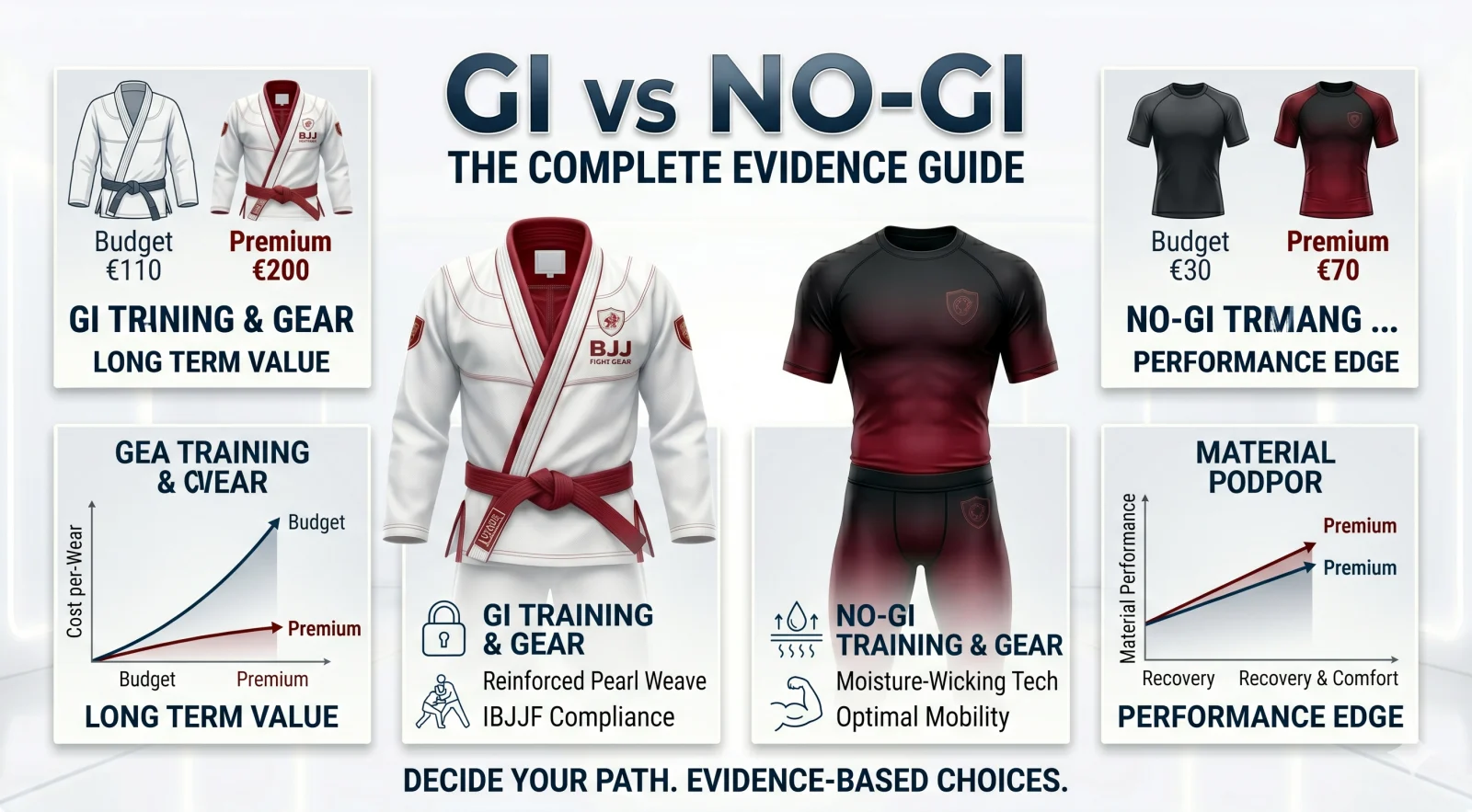
    The biggest difference is simple: gi BJJ is practised wearing a traditional kimono consisting of a jacket, trousers and belt, while no-gi BJJ is practised wearing a rashguard and grappling shorts. Because of the clothing, the techniques and pace of the game change significantly.

    The benefits of starting with gi

    Many experienced practitioners recommend that beginners start with gi training. That doesn’t mean it’s better than no-gi, but it does offer some unique advantages.

    The grips slow everything down

    One of the biggest benefits of the gi is that the grips naturally slow the pace of the roll. Your opponent can grab your sleeves, collar and trousers — and you can do the same. Because movement becomes more restricted, beginners often have a little more time to think about what they’re doing. Instead of relying purely on speed and athleticism, you start learning position before submission, how to break grips, how to create angles, patience under pressure, and technical problem-solving.

    For beginners, this slower pace can make learning less overwhelming. It’s often compared to learning chess — you still have to make decisions under pressure, but you usually have an extra second to recognise what’s happening and choose your response.

    The gi develops strong fundamentals

    The gi rewards precision. Small mistakes often get exposed quickly because experienced training partners can control you through grips. Over time, beginners develop better posture, better balance, more awareness of weight distribution, strong defensive habits and grip-fighting skills.

    Many people feel that the gi teaches them to become more methodical and technical. Some feel also that defense in the gi is more difficult, so focusing on the gi in the beginning can build better long term defensive habits.

    Grip strength improves naturally

    Holding sleeves, collars and trouser grips builds a tremendous amount of grip endurance. It’s one of those benefits you don’t notice until you suddenly realize opening a jar has become much easier.

    The benefits of starting with no-gi

    No-gi has exploded in popularity over the last decade. With organisations like ADCC and professional events becoming more visible, many beginners are drawn to its faster pace.

    No-gi can feel more natural

    Most people have never worn a gi before, but everyone understands wrestling around in sports clothing. Without the grips, movement often feels more intuitive.

    The pace is faster

    No-gi generally involves more scrambles, faster transitions, less static positions, and a greater emphasis on movement. Some beginners love this energy — if you enjoy fast-paced sports, no-gi can be incredibly addictive.

    Less laundry and maintenance

    It’s not the most exciting benefit, but it’s true. No-gi gear dries quickly and takes up less space. Rashguards and shorts are often easier to wash than heavy gis.

    Is gi better for beginners?

    Not necessarily. But many coaches believe gi provides a slightly easier learning environment and instills better habits. The grips slow things down enough that beginners can think through situations instead of simply reacting, and you often have more opportunities to recognize mistakes and understand why something worked—or didn’t.

    That said, if no-gi is what excites you most, that’s where you should start. The best style is the one you’ll actually keep showing up for.

    Can gi practitioners do no-gi?

    Absolutely. The principles transfer well: escapes, guard retention, pressure, timing and submissions. The biggest adjustment is learning to control opponents without relying on grips.

    Can no-gi practitioners do gi?

    Of course. However, many no-gi athletes initially find the grips frustrating. Collar grips and sleeve controls can make them feel like they’re moving in slow motion. Learning grip fighting becomes a skill in itself.

    Which one is better for self-defence?

    People often debate this. The reality is that both have value.

    Gi advantages: most people wear clothing you can grip, you learn to control opponents through fabric, and the slower pace encourages positional control.

    No-gi advantages: faster reactions, better adaptation to movement without grips, and strong scrambling ability.

    Rather than arguing which is superior, it’s probably more accurate to say they prepare you for different situations.

    What gear do you need?

    Gi training:

    • BJJ Gi
    • Belt
    • Rashguard (recommended)
    • Mouthguard
    • Sliders or flip-flops

    No-gi training:

    • Rashguard
    • Grappling shorts
    • Optional spats
    • Mouthguard
    • Sliders or flip-flops

    So… which one should you choose?

    Choose gi if you: enjoy a more methodical pace, like technical problem-solving, want more time to think during rolls, and enjoy the traditional aspect of martial arts.

    Choose no-gi if you: prefer fast-paced action, enjoy constant movement and scrambles, come from a wrestling background, and like a more minimalist approach.

    Or do what many people eventually end up doing: train both. Each style exposes weaknesses in the other and helps you become a more complete grappler.

    Final thoughts

    Whether you start with gi or no-gi, the most important thing isn’t which style you choose. It’s getting on the mats.

    Some people fall in love with the strategic pace of the gi, where grips slow the action down and force you to think several steps ahead. Others prefer the speed and intensity of no-gi, where movement never stops. Neither path is right or wrong.

    The best choice is the one that keeps you excited to train next week, next month and next year. Because consistency—not the clothes you wear—is what makes you better at Brazilian Jiu-Jitsu.

  • BJJ Hygiene 101: Gear Mistakes That Get You Avoided

    BJJ Hygiene 101: Gear Mistakes That Get You Avoided

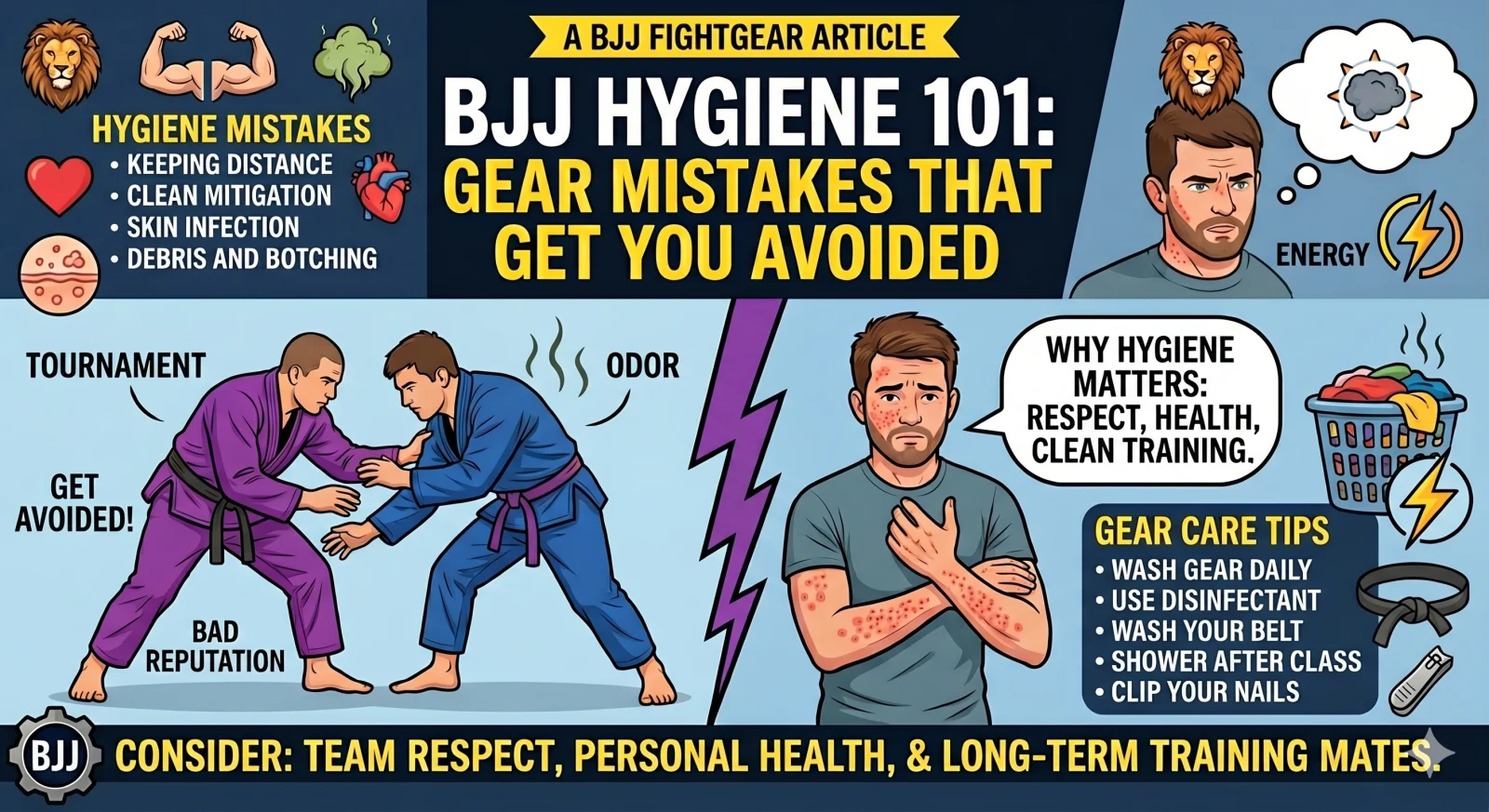
    Nobody tells beginners this when they start Brazilian Jiu-Jitsu: people would rather roll with the dangerous guy than the smelly guy.

    Good hygiene in BJJ isn’t optional. You’re training in close contact, sweating on mats, sharing space, and spending hours grabbing each other’s clothing. The good news? Most hygiene problems are easy to avoid.

    Here are the biggest BJJ hygiene mistakes beginners make—and how to avoid becoming the training partner people secretly avoid.

    Why hygiene matters in Brazilian Jiu-Jitsu

    Brazilian Jiu-Jitsu is a close-contact sport. Poor hygiene doesn’t just create unpleasant training sessions—it increases the risk of skin infections, bacteria spread, ringworm and fungal infections, staph infections, and unpleasant training experiences. Good hygiene protects you, your training partners, and your gym environment.

    Mistake #1: Not washing your gi after every session

    This is the biggest mistake beginners make. Your gi absorbs sweat, skin bacteria and dirt from the mats. Even if it “doesn’t smell yet,” bacteria are still there.

    Rule: wash your gi after every training session. Not every two sessions. Not tomorrow. Every session!

    Bonus tip: hang your gi immediately after training if you can’t wash it right away. Throwing it into a closed gym bag for 8 hours is a disaster.

    Mistake #2: Reusing rashguards and no-gi gear

    Rashguards aren’t magically cleaner than gis. They collect sweat, bacteria and skin cells. If you train no-gi, wash your rashguard, shorts, and spats after every session. Owning multiple sets becomes useful quickly if you train frequently.

    Mistake #3: Leaving gear inside your gym bag

    Your gym bag is not storage. Leaving sweaty gear inside creates smell buildup, mold risk, and faster gear deterioration.

    What to do instead: immediately after training, open your bag, remove the sweaty gear, and let everything air out. This simple habit will keep your gear fresher for longer.

    Mistake #4: Ignoring your flip-flops

    Walking barefoot in changing rooms, bathrooms and hallways, then stepping onto the mats, is asking for problems. Good BJJ hygiene means wearing flip-flops everywhere except on the mats. This is probably the easiest hygiene habit to build.

    Mistake #5: Not cleaning your mouthguard

    Your mouthguard spends hours in your mouth, covered in saliva, inside warm gym bags — yet many people never clean it. Rinse it after training, wash it regularly, and let it fully dry. Otherwise, you are basically putting bacteria directly into your mouth.

    Mistake #6: Poor nail hygiene

    This sounds obvious, yet everyone eventually trains with someone who forgot. Keep fingernails and toenails short. Long nails create cuts, scratches and infections — nobody enjoys getting sliced open during guard passing.

    Mistake #7: Training while sick

    This one is simple. If you have a fever, flu symptoms, stomach issues, or contagious skin conditions, stay home! Missing two training sessions is better than getting your entire gym sick.

    Mistake #8: Ignoring skin problems

    See something suspicious? Don’t ignore it. Watch for ring-shaped rashes, strange bumps, unusual redness, or skin irritation that spreads. Early treatment is easier. Training through infections is not tough and will get you and your training partners in trouble — it’s irresponsibility.

    How often should you wash BJJ gear?

    Simple rules:

    • Gi — every session
    • Rashguard — every session
    • Shorts — every session
    • Spats — every session
    • Mouthguard — every session
    • Gym bag — weekly minimum

    Beginner BJJ hygiene checklist

    Before training:

    • Nails trimmed
    • Clean gear
    • Flip-flops packed
    • No suspicious skin issues

    After training:

    • Wash gear
    • Air out bag
    • Clean mouthguard
    • Shower

    Final thoughts: good hygiene makes you a better training partner

    Nobody expects beginners to know every technique. Everyone expects basic hygiene. The fastest way to become someone people enjoy training with isn’t better guard retention. It’s simple: show up clean. Train hard. Leave clean.

    Bonus tip and product recommendations

    If you can’t wash the smell of sweat out of your gear anymore, don’t worry — soak it all in a bucket of vinegar and baking soda. This will kill the bacteria and thus the smell. Make sure to wash your stuff after, because the vinegar will otherwise leave a smell of its own.

    For personal hygiene and after-training care, we highly recommend the Defense Soap Bar. To wash your gear, the Defense Laundry Booster will keep it smelling fresh.

Tạo tài khoản trong 30 giây — không cần điền địa chỉ ngay.

Dùng để nhận xác nhận đơn hàng và mã vận đơn.

Dữ liệu cá nhân của bạn sẽ được dùng để hỗ trợ trải nghiệm mua sắm trên website, quản lý quyền truy cập tài khoản và các mục đích khác được mô tả trong chính sách riêng tư.

Đã có tài khoản?